
Use Visual Timers to Get Things Done
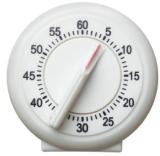
Visual timers, whether at home, work or school, are one of the best ways to manage time for both personal and group activities.
Their portability means they can be used for virtually anything you want to put a limit on, so you can balance out all the things you want to do during the day.
If you're not using one yet, you may decide you want to after reading this.
Here are some reasons why habitually using a timer is so beneficial in your life and work...
A visual timer helps you get things done effectively
Two of the most important day to day time management skills you can ever master are knowing how to start something you’ve decided to do and when to stop working on it. This is where a timer comes in...
Why?
Because they’re great for doing both!
During the course of a typical day, there will be activities that you see right through to completion. Boiling an egg, sending an email or making a coffee are short enough to do in one go...

On the other hand, roles and routine tasks you perform, projects you’re working on, or goals you’re working towards may get your attention (on a good day), but invariably not enough to actually finish it...

That sweet moment of completion comes if you’ve learnt how to habitually do the important tasks that are not urgent, as the time management matrix explains.
Good time management depends on your ability to set and stick to limits on how much time you give to everything you decide to do. In other words, can you get started on something and finish doing it when you say you will?
Use a timer to help you to re-start and know when to stop.
An example
Most days I look forward to working on this website, particularly the ‘producing pages’ part. But I’ve also got plenty of other roles, goals, projects and responsibilities in my life.
Using a timer has been invaluable as way to limit the amount of time I spend running this website because it prevents me from spending too much time on it at the expense of everything else that matters.
In other words, it helps me keep a better work-life balance.
On the other side of the coin, I’ve used a timer to help me learn how to avoid procrastination by time boxing tasks that, for some reason, I don't want to do.
Visual timers help you all get things done effectively
As well as helping you personally, a timer that you can actually see is great for improving time management at work.
Whether at work, school or home, timers…
- Ensure you run an effective meeting
- Enhance group work focus
- Keep presentations on track
- Improve awareness of deadlines
Does it have to be a visual timer?
In all honesty?
Not really.
But they do allow you (and others) to quickly and easily see how much time you’ve used or got left before a deadline.
This is useful if you want to train yourself, colleagues or kids to pace what has to be done.
What really matters is that you actually use a timer. Whether you’ve got one, but you don’t use it, or you need to buy one, do so -- it really is one of the best time management tools you’ll ever use.
Use yours to ensure you make balanced progress on whatever roles, goals and ongoing projects you planned to work on during any day...
Do you need to get a better balance in your life?
Click below to check out the
Time Management Success
e-book!
- Home ›
- Time Management Tools ›
- Visual Timers